
Power Tools and the Assembly Line
I’m learning to use AI like a power tool—but I’m keeping a wary eye on the people building assembly lines


I’ve been thinking a lot about the power tools in my garage recently.
The connection to how AI is changing college classrooms isn’t immediately obvious, but my hobby as a woodworker is helping me think through an apparent paradox at the heart of this newsletter. Regular readers know that, as part of my effort to make sense of how AI is challenging college classrooms, I’m actively experimenting with AI tools both in my teaching and in my writing process for this newsletter. (I’ve used AI in just about every stage of writing here, from idea capture using voice-to-text all the way through drafting and editing, though how I lean on it varies a lot from post to post.)
I still have very real worries about this transformative new technology, though, despite my hands-on approach. As a professor, I see significant threats to higher education generally, and to the things I care most about in my own classroom. I also worry about decisions that the big AI labs are making in their race to reel in users and expand their reach, which are causing obvious harms.
The decision to use AI tools here, then, is far from neutral. So why, despite my reservations, am I using them for so many things, including as part of my writing process here?
This essay is an answer to that puzzle, and it starts with the power tools in my garage.
§
In The Trouble with Authenticity, I suggested that we can think about AI and writing by thinking about how the introduction of power tools changed woodworking. Two points seem especially important. First, the thing that made table saws powerful also made them inherently dangerous. If you want to learn how to use one, even casually, it is very much in your best interest to internalize some important safety rules first. Second, to use a table saw well, you still need to know quite a lot about carpentry to build anything good.
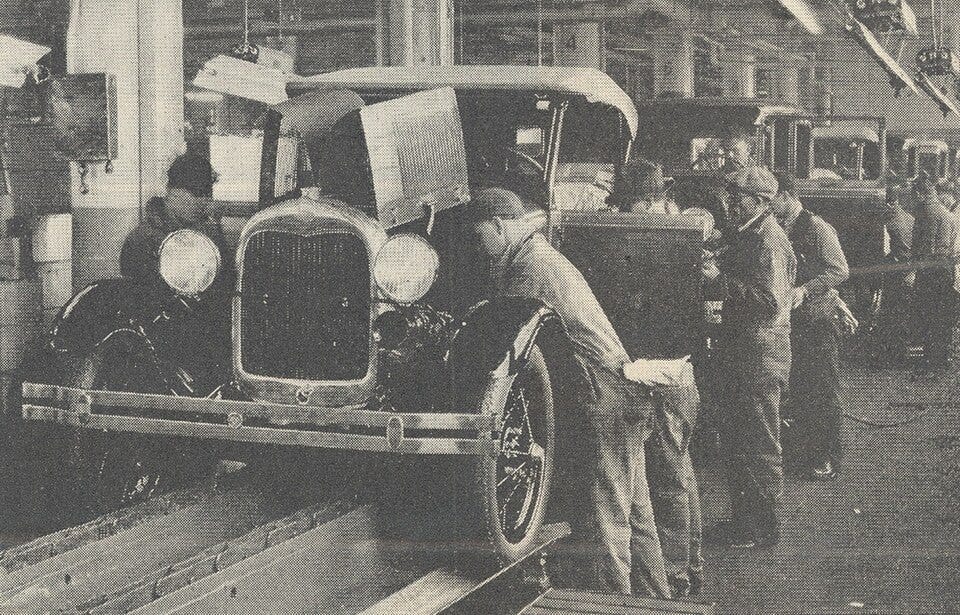
Thinking about woodworking also highlights a key distinction that I think we badly need. What we call “AI” actually refers to many things; two of its most important forms right now are chatbots and agentic workflows. A chatbot is akin to the power tools in my garage. If I have craft skills and know what I’m building, I can use a chatbot like a power tool—I can work with it directly to extend my capacities. An agentic workflow, on the other hand, gives the same AI model that powers the chatbot access to tools, carefully engineered operating instructions, and the ability to execute extended workflows by itself. The whole point of an agentic workflow is to take human hands off the work for long stretches. This is less like a power tool and more like an assembly line.
The unsettling part is that the same companies making the power tools are also busy designing assembly lines.
§
Why, then, use the thing I’m so worried about?
The first reason is straightforward: I don’t think I can understand AI without actually using it. This technology is so new that even the people who created it are still figuring out what it can do. I could try to reason my way through these questions from first principles, or by watching my students. But ultimately I’m a craft teacher, and that’s not how craft knowledge works. I have to pick up the tools.
Only by using these tools can I learn where productive struggle lives and where it doesn’t, what’s safe and what’s dangerous, and how using the tools affects the work we’re actually trying to do. The fundamentals come first, and to me they are non-negotiable: writing is thinking. AI comes next: how does using it affect writing and thinking?
There’s also a very human reason, which is that I have always loved using tools. A well-conceived tool that does a particular job well is one of the most beautiful things I know. And AI is a remarkably powerful tool. Seemingly out of nowhere, computers can now follow directions given in natural language, absorb enormous amounts of context, and spit out words at dizzying speeds. As someone who has always used words to think and communicate, this fills me with curiosity and a bit of a thrill. It is an invitation to play, to experiment, to test the limits of an amazing new tool. If I’m entirely honest, I’m experimenting with AI in no small part because it is fun.
And so I’m left torn between warring impulses and emotions, all of which—including both the worry and the fascination—are quite real.
§
Let’s extend the analogy even further. Imagine a shop teacher, steeped in the craft of woodworking and skilled in the use of hand tools, arriving one day to discover rows of table saws filling half the room. Every day the instructor teaches students how to use the hand tools, gives them homework, tells them the power tools are off limits, and goes home, leaving the shop open to students overnight.
If you were that shop teacher, how would you respond if you started to see evidence in their completed projects that your students were using the table saws?
My answer is to learn to use the tools myself so that I know how they work, what they are good at, where they fall short, and how they affect the work. But that does not mean I think anything goes. As a professor of Environmental Studies, I am intimately acquainted with the kinds of questions that are now swirling around AI. Many of the systems that we rely upon in our everyday lives—food, heating and cooling, electricity, water, transportation, communication—have negative social and environmental consequences that few of us would actively endorse. We each end up making decisions about how to draw the lines that we choose not to cross—omnivore or vegetarian? organic or conventional? internal combustion or electric?—for each such problem.
Because I take the structural critiques of AI seriously, I’ve slowly been clarifying which lines I choose not to cross with AI. With very few exceptions, I don’t use it to generate images, and I have no desire to use it to generate videos. Neither is central to the work that I care about, and both are significantly more resource intensive than text. They are not central to my work, so I choose not to use them.
This makes me feel better, but individual consumer decisions like this rarely move the needle on structural problems. Even greater agency comes from doing the highest-leverage work you can find, which more often than not is done working alongside others, such as through political organizing or activism.
My own highest leverage work lies in my role as a professor, where I have control over what I do in my own class. When it comes to AI, I’m able to decide how to learn what it can and can’t do, how to explore the possibilities it creates and what dangers it presents, and how to pursue the conversations I most want to have with others.
That’s why—and how—I’m using AI.
§
That’s AI as a power tool, and it works well as a metaphor—but only as far as it goes. The other metaphor that I’ve been thinking a lot about is the assembly line, which points to a structural worry I can’t shake. OpenAI and Anthropic have both announced multibillion-dollar efforts that seem to follow a model popularized by Palantir around “forward-deployed engineers.” In this model, AI engineers “embed” with a client for months to understand its operations thoroughly. Anthropic’s $1.5 billion enterprise services company focuses on midsize companies, and OpenAI’s $4 billion Deployment Company aims at organizations of any size, including the largest.
The companies pitch this as providing expert help integrating AI into business workflows. But I’m most concerned by what it signals: AI experts observing workers who have accumulated deep knowledge and hard-earned skills—the kind that lets them do valuable, well-compensated work—in order to encode that expertise into AI systems.
The AI companies may be interested in speeding adoption, but the end point looks an awful lot like building automated systems that will make skilled cognitive labor less valuable. Table saws require skilled operators, but the Anthropic and OpenAI deals look more like trying to learn the secrets of every expert carpenter in town and incorporate them into assembly lines.
This is what turns the analogy into something more than a metaphor. The Industrial Revolution was something very different from factory owners handing power tools to craftsmen. Instead, it systematically replaced workshops full of skilled craftsmen with unskilled workers staffing assembly lines. The new arrangements were often brutal for workers, economically tumultuous, environmentally harmful, and socially stratifying. Its most damaging consequences consistently appeared where big capital exploited people and the environment, moving the lion’s share of profitable new arrangements away from the people doing the work and into the hands of factory owners and investors.
The point is not that AI will replay the Industrial Revolution in any simple way. It is that powerful new production systems tend to redistribute skill, agency, and profit unless people fight over their design.
It would be far too simple to say “craft good, factory bad”—assembly-line work also created the stage on which the labor movement thrived and created whole new skilled trades, from engineers to machinists to toolmakers. A better interpretation would be: meaningful, well-compensated work good; the exploitation of people and the environment bad.
The point is not that AI will replay the Industrial Revolution in any simple way. It is that powerful new production systems tend to redistribute skill, agency, and profit unless people fight over their design.
At a recent graduation ceremony, a speaker called AI a new Industrial Revolution and the crowd booed lustily. This confused many people, but the fact that new college graduates were the ones booing loudest makes perfect sense: they had just spent four or more intense (and expensive) years earning skills and credentials with the hope that their efforts would give them a leg up in the economy. The speaker getting booed was telling them, as they prepared to cross the stage to receive their degrees, that they should be excited about a pending revolution whose first act is to incorporate their hard-won skills into the economy’s newest assembly lines.
It would only be surprising if they didn’t boo.
I’m far removed from my own graduation, but my personal stakes in this are still high: I’m both a college teacher trying to figure out what all of this means for my own students and the parent of three kids in high school (a rising sophomore and twins who are rising seniors). My current students have a million questions, as do alums. A former student wrote me recently after stumbling across this newsletter, for example, which has led to a series of fascinating conversations. They see all of this clearly—and I share more of their fears than you might expect.
This isn’t abstract for me.
§
All of this complicates how I’m thinking about the metaphorical tools in my garage. The same companies making them are also busy building assembly lines. Our current trajectory is uncertain, and the fight over which direction it goes matters tremendously. What the future will look like is an open question.
That fight is not only structural. It is personal, pedagogical, and unevenly distributed. These big structural problems sit right alongside the everyday classroom ones, in rooms full of students who span the spectrum from refusers to super-users. Many of them are anxious and confused, and all of them are being marketed to relentlessly. It’s hard to know what to tell them.
In all of this, I feel a real sense of obligation to speak as someone in a relatively secure position. I’ve talked with too many people—including students who refuse AI on principle, and pre-tenure and non-tenure-track colleagues—who don’t feel free to say what they actually think, for fear of what it might cost them professionally.
The former student who reached out to me after discovering this newsletter is a case in point. They refuse AI as a political act, not as a consumer preference. They know exactly what AI can do for them, but they’re refusing it anyway, at real personal cost, because they worry “that AI use will habituate people to selling their soul sliver by sliver in tiny, inconsequential, and unremarkable ways.”
The path that they have chosen is, without doubt, a hard one to walk. Not everyone can walk it. But they asked whether it’s too much to hope that anyone might say thank you for choosing it.
It’s not too much. I’m saying it, and I want them—and everyone else who feels obliged to throw themselves into the machinery of the assembly line to stop a future they don’t want—to hear me clearly: Thank you.
I respect the line that refusers are drawing, even if I am drawing the line differently myself. I believe that there is more than one way to approach a problem, and that context matters. I’m fighting the assembly line by trying to make sure my students understand the difference between a tool that can extend their skill and a machine designed to replace it.
I have the privilege and safety of tenure to test these tools, find their limits, try to build guardrails, and share what I learn here.
I’m also actively trying to avoid a very real harm that grows from not learning the tools. I’m increasingly convinced that if we primarily assign work that is easily completed by AI, then we will be guilty of teaching students that the work we’re asking them to do and the skills we’re helping them acquire aren’t as valuable as we say—or, worse, that the most important lesson is learning how to avoid getting caught rather than how to do the work well.1
I did not ask for the metaphorical table saws that have appeared in my classroom, but I feel compelled to figure out how they work, how to make them safer for my students to use, and how to use them to extend the craft that I have spent my career developing. That is my work as I see it.
Where are you drawing your line between using the tool and feeding the assembly line?
Hit reply. I’m listening.
Interested in how I use AI in this newsletter? Read more here.
For an insightful interview that interprets widespread cheating with AI from the perspective of a graduating student, see Evan Goldstein, “’Theo Baker Is a F**king Menace!‘” Chronicle of Higher Education, May 21, 2026.